
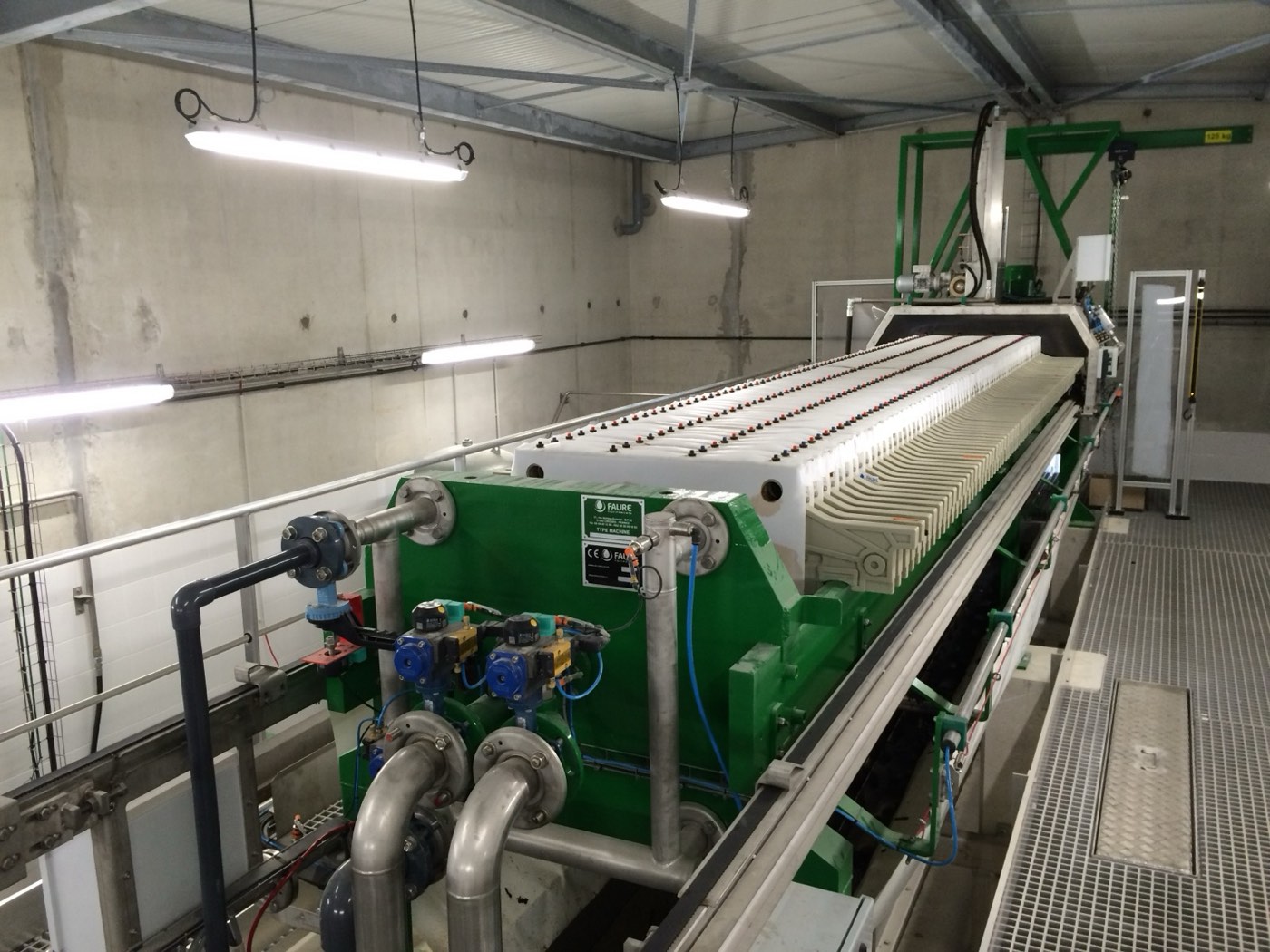
Both the filter press and the rotary press turn liquid sludge into a handleable cake, but they work on very different principles. Faure Equipements manufactures both, which makes it a useful reference to compare them.
The filter press: batch, high pressure, high dryness
A filter press fills chambers formed by plates covered with filter cloths, then presses the sludge until the cake is formed. Cycles last from about 40 minutes for some minerals to several hours for organic sludge. Automatic filter presses run one cycle after another without an operator: plate shaking removes stubborn cakes and a weighing system checks that each plate is empty. Membrane (mixed-pack) plates generally give the best dryness and cake release. Faure's automatic presses treat from 20 kg to 100 tonnes of suspended solids per day.
The rotary press: continuous, slow, enclosed
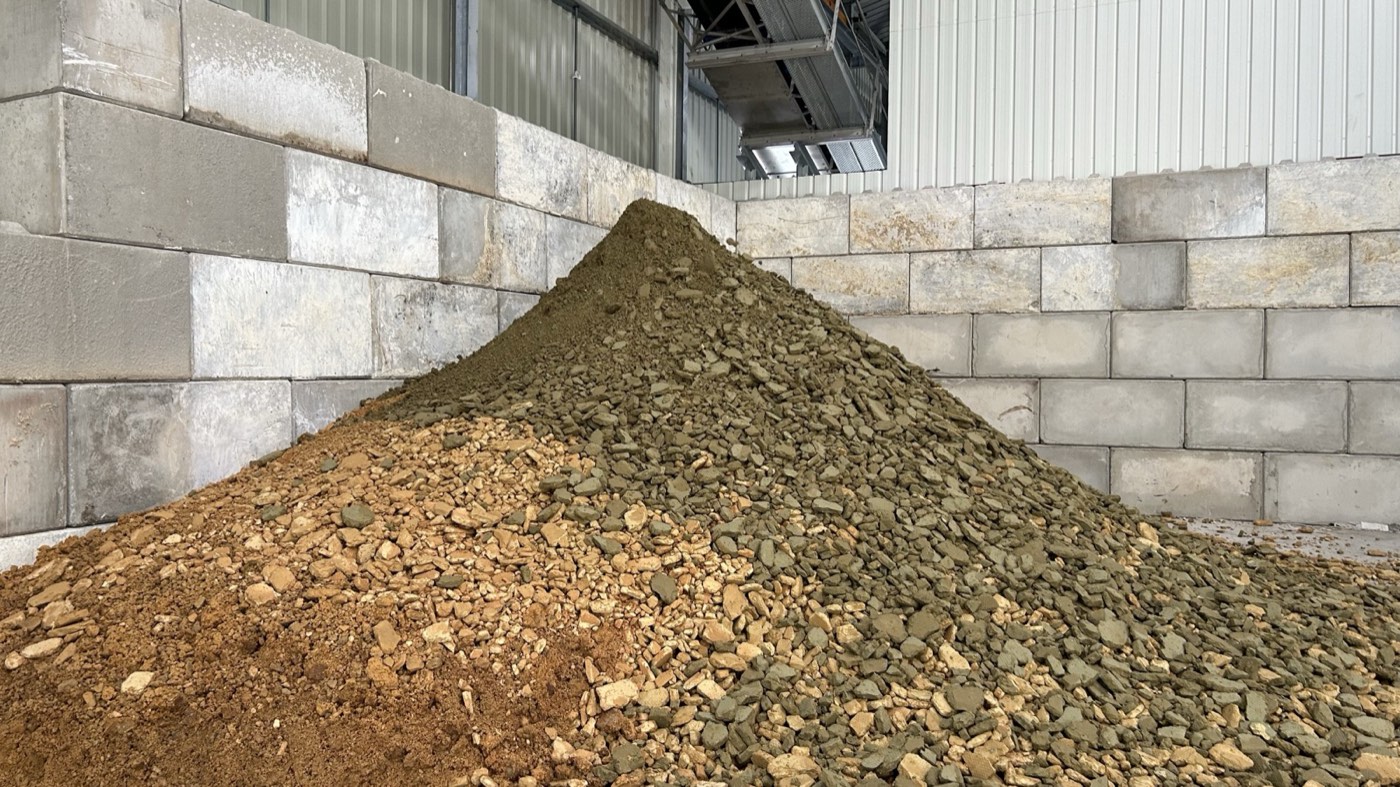
In a rotary press, sludge conditioned with polymer is fed at very low pressure into a channel between two parallel filtering elements. While free water drains, the slowly rotating elements drive the solids by friction towards an outlet restrictor, building enough pressure to extrude the cake. According to Faure, the rotary press runs continuously 24/7, is fully automated and enclosed, quiet and vibration-free, uses little energy, needs a self-cleaning cycle of about five minutes per day, does not require prior thickening, and can be extended by adding channels.
Side by side
| Criteria | Filter press | Rotary press |
|---|---|---|
| Operation | Batch cycles | Continuous 24/7 |
| Pressure | High pressure filtration | Very low feed pressure, extrusion |
| Typical dryness | Generally the higher of the two (35 to 37 % on lime-conditioned biological sludge, 75 to 87 % on minerals in the Faure references above) | Generally lower than a filter press on the same sludge |
| Conditioning | Lime, ferric chloride or none (minerals) | Polymer |
| Footprint | Larger, with cake handling below | Small footprint |
| Environment | Open plate pack | Totally enclosed, reduced odours |
| Typical use | Large plants, high dryness targets, minerals and industry | Small and medium plants, continuous operation, limited staff |
How to choose
The decision depends on the dryness required by the disposal route, the quantity of solids, the available space and staffing, and the conditioning chemicals the plant is ready to use. Pilot tests on the actual sludge remain the best way to decide. Soditech can organise this assessment with Faure Equipements; see also our filter press case studies.
Sources: Faure Equipements documentation (automatic filter presses, rotary press) and Faure reference sheets.
Résumé en français : l'article complet est disponible en anglais (bouton EN).
Le filtre-presse et la presse rotative produisent tous deux un gâteau de boue, mais selon des principes très différents. Faure Equipements fabrique les deux.
Filtre-presse
Filtration sous haute pression par cycles, secouage des plateaux et contrôle par pesée sur les versions automatiques, plateaux à membrane pour la meilleure siccité. De 20 kg à 100 tonnes de matières sèches par jour.
Presse rotative
Alimentation à très basse pression, extrusion continue entre deux éléments filtrants en rotation lente. Fonctionnement 24/7, équipement fermé, faible consommation, encombrement réduit, sans épaississement préalable.
Bien choisir
Siccité visée, quantité de matières, place et personnel disponibles : des essais pilotes sur la boue réelle restent la meilleure méthode. Soditech peut les organiser avec Faure Equipements.
En savoir plus sur Faure Equipements → Parler de votre projet →