
The Gulf has no permanent rivers. Drinking water in the GCC relies to a very large extent on desalination, and the region accounts for a major share of the world's desalinated water production. Behind every desalination plant there is a step that rarely makes headlines: remineralisation.
Why desalinated water must be remineralised
Reverse osmosis and thermal desalination strip water of almost everything, including calcium, magnesium and alkalinity. The result is an aggressive, corrosive water that attacks pipes and does not meet distribution standards. WHO guidance and national regulations require a minimum mineral content and a stable water balance before distribution.
How remineralisation works
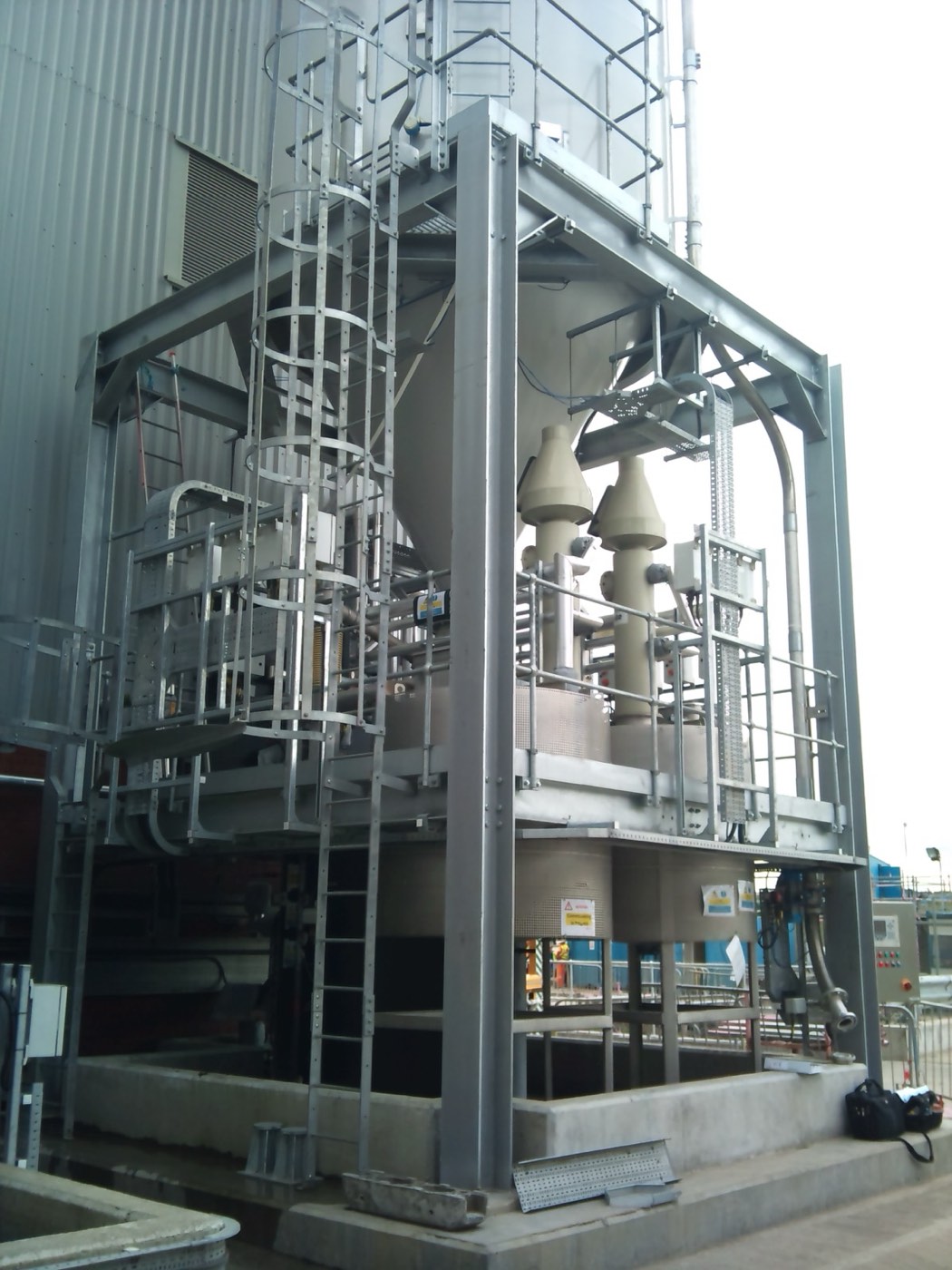
Plants restore the mineral balance by adding lime and carbon dioxide, or by passing water through calcium carbonate (limestone) contactors. Lime-based remineralisation requires a lime line able to store, extract, dose and prepare lime slurry or lime water continuously.
What makes a lime line reliable
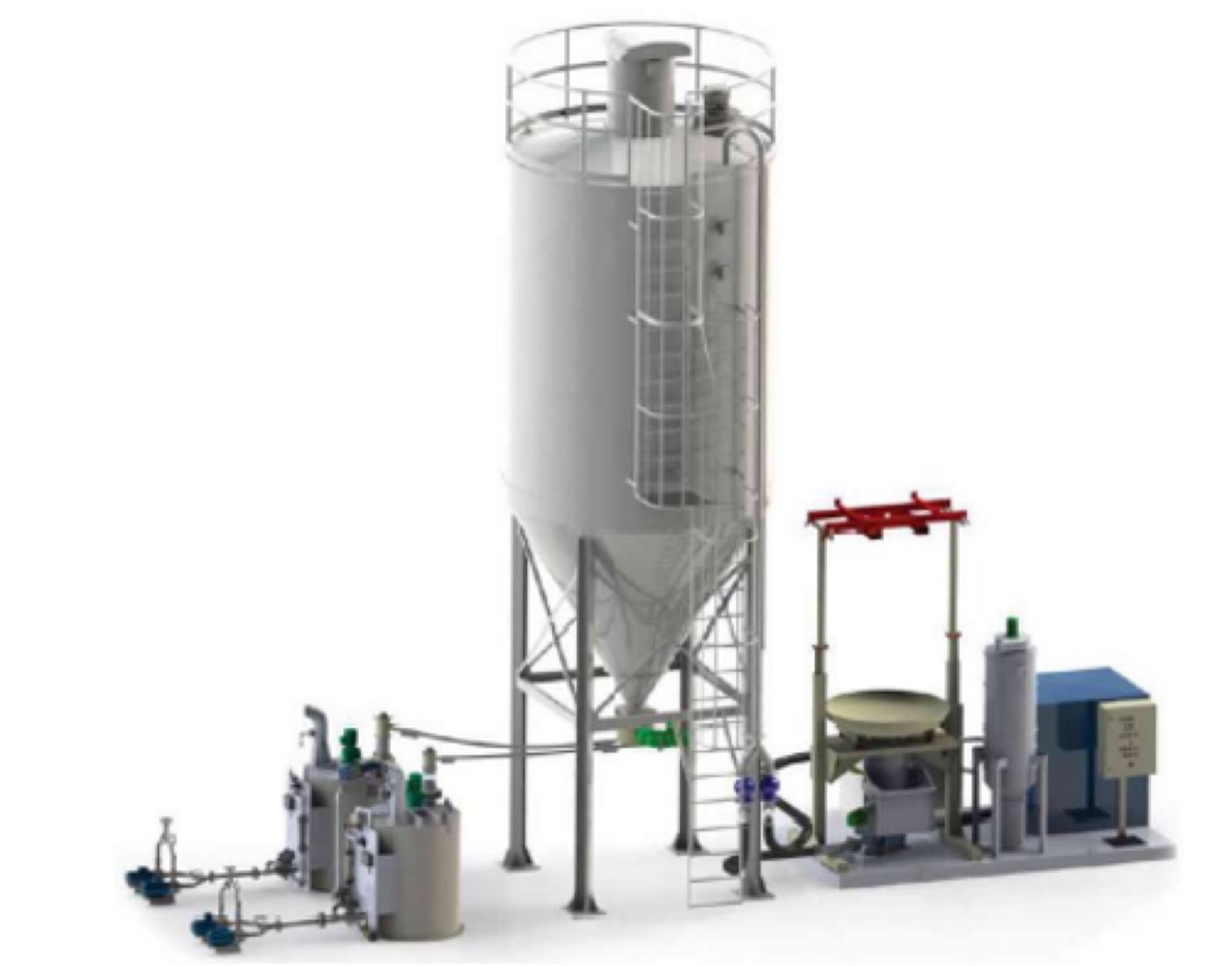
- Storage: silos or big bag stations sized to consumption and delivery logistics.
- Extraction: mechanical discharge that prevents bridging and rat-holing, a frequent issue with hydrated lime in hot, humid coastal sites.
- Dosing: volumetric or gravimetric feeders that follow the plant's flow.
- Preparation: slurry tanks or slakers, with pumping and injection designed for an abrasive, scaling product.
- Redundancy: duplicated lines so that maintenance never interrupts remineralisation.
Experience in the region
Sodimate has supplied lime lines to desalination projects in the UAE, Saudi Arabia and Bahrain since 2008, from Fujairah and Al Dur to Duba, Jubail and Amaala. The details are in our case study on Sodimate's GCC references.
Sources: Soditech analysis "Desalination and remineralisation" (2026), citing GCC Statistical Center and HydroRIVERS data; Sodimate reference lists.
Résumé en français : l'article complet est disponible en anglais (bouton EN).
Le Golfe n'a pas de rivières permanentes : l'eau potable y dépend largement du dessalement. Or l'eau dessalée, privée de calcium et d'alcalinité, est agressive pour les réseaux et doit être reminéralisée.
La ligne chaux, étape critique
La reminéralisation à la chaux et au CO2 exige une ligne fiable : stockage adapté, extraction mécanique sans voûtage, dosage suivant le débit, préparation et injection d'un produit abrasif, et redondance pour la maintenance.
Expérience régionale
Sodimate équipe des usines de dessalement aux Émirats, en Arabie saoudite et à Bahreïn depuis 2008 (Fujairah, Al Dur, Duba, Jubail, Amaala). Voir notre étude de cas dédiée.